Transforming School Education Classroom Academic Visuals with Advanced 3D Typography
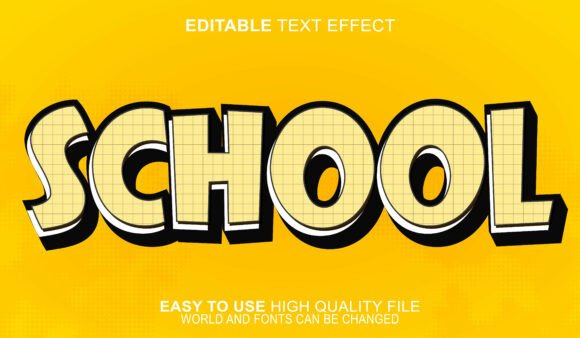
In the evolving landscape of digital communication, the way institutions present their identity has shifted dramatically from static flat designs to immersive, dimensional experiences. For educators, administrators, and graphic designers working within the School Education Classroom Academic sector, the ability to create compelling visual narratives is no longer optional; it is a necessity for engagement. A high-quality, fully editable 3D text effect resource for Adobe Illustrator stands at the forefront of this transformation. This professional graphic tool allows users to generate scalable vector graphics that maintain pristine clarity regardless of how large they are displayed, making them ideal for everything from campus signage to digital social media campaigns.
The Evolution of Academic Branding and Dimensional Design
Historically, academic branding relied heavily on traditional serif fonts and flat color palettes to convey authority and tradition. While these elements remain relevant, the modern educational environment demands a fresh approach that resonates with students who have grown up in a digital-first world. The integration of three-dimensional typography introduces depth, texture, and personality to institutional communications. When applied to School Education Classroom Academic materials, these effects can transform a standard announcement into an event that captures attention immediately.
The shift toward 3D design in education is not merely about aesthetics; it is about psychological impact. Dimensional text suggests substance, weight, and importance. It implies that the content behind the words is robust and well-structured. For a university launching a new research initiative or a primary school promoting a science fair, the visual weight of 3D text can subconsciously signal quality and innovation. By utilizing a resource designed specifically for Adobe Illustrator, creators can bypass the complex modeling processes usually required for such effects, focusing instead on strategic application and customization.
Bridging the Gap Between Tradition and Modernity
One of the most significant challenges in academic design is balancing the need for a professional, scholarly appearance with the desire to appear modern and accessible. High-quality 3D editable text effects offer a unique solution to this dilemma. Because the resource is fully customizable, designers can adjust the lighting, bevel angles, and material properties to suit the specific tone of the institution. A law school might opt for a metallic, stone-like finish to evoke permanence and strength, while an art department might choose vibrant, glossy textures to suggest creativity and energy.
This flexibility ensures that the School Education Classroom Academic brand remains consistent yet dynamic. The underlying vector structure guarantees that whether the text is viewed on a small mobile screen or projected onto a massive auditorium screen, the edges remain crisp and the details intact. This scalability is a critical advantage over raster-based images, which often suffer from pixelation when enlarged. In an era where cross-platform consistency is paramount, having a single asset that performs flawlessly across all mediums is invaluable.
Technical Advantages of Scalable Vector Resources
At the core of this design resource lies the power of vector technology. Unlike bitmap images composed of pixels, vector graphics are defined by mathematical equations. This fundamental difference offers profound benefits for professionals working in the education sector. When a designer selects a piece of text within Adobe Illustrator and applies the 3D effect, the resulting object remains fully editable. Every curve, shadow, and highlight can be manipulated without degrading the image quality.
For institutions managing large-scale marketing campaigns, this editability translates to efficiency. Consider a scenario where a school needs to update its annual calendar posters monthly. With a static image, each change requires starting from scratch. However, with an editable 3D text effect, the process involves simply selecting the text layer, typing the new month, and perhaps adjusting the color palette to match the season. The 3D geometry recalculates instantly, providing a fresh look in seconds. This workflow optimization is essential for busy administrative teams and student organizations that often lack dedicated design departments.
Ensuring Quality Across Diverse Media
The versatility of vector-based 3D text extends beyond digital screens. Print production remains a vital component of academic communication, from brochures and flyers to banners and merchandise. One of the most common pitfalls in print design is the loss of resolution when scaling up. A logo or headline that looks perfect on a monitor may appear blurry on a billboard. The School Education Classroom Academic resource eliminates this risk entirely. Because the vectors are resolution-independent, the output quality is determined solely by the printer's capabilities, not the source file.
Furthermore, the ability to separate layers within the Illustrator file allows for sophisticated printing techniques. Designers can isolate the base text, the shadows, and the highlights to apply different ink types or foil stamping effects. This level of control enables the creation of premium tactile materials that enhance the perceived value of the institution. A graduation invitation featuring embossed 3D lettering, derived from this editable template, conveys a sense of occasion and prestige that flat text simply cannot achieve.
Practical Applications in Educational Environments
The utility of high-quality 3D editable text effects spans a wide array of use cases within the educational ecosystem. From the classroom to the corporate boardroom of a university, these assets serve as powerful tools for communication and branding. Understanding where and how to deploy these resources effectively can significantly elevate the visual standards of an organization.
Creating Eye-Catching Posters and Event Marketing
Posters remain one of the most effective ways to drive attendance for campus events, lectures, and workshops. In a hallway filled with competing announcements, a poster featuring bold, dimensional typography stands out immediately. The depth created by the 3D effect draws the eye inward, encouraging viewers to read the details. Whether promoting a sports tournament, a guest speaker series, or a cultural festival, the ability to customize the text style allows the design to reflect the mood of the event. A music concert poster might feature neon-lit 3D text, while a academic conference might utilize sleek, minimalist chrome effects.
For student clubs and societies, this resource democratizes high-end design. Students who may not have advanced 3D modeling skills can still produce professional-grade promotional materials. By simply changing the text and colors in the provided template, they can create cohesive branding for their initiatives, fostering a sense of professionalism and pride within the student body.
Modernizing Logos and Institutional Identity
Logos are the face of an institution, and in the digital age, they must be versatile enough to function in various contexts. Many educational institutions are updating their visual identities to include 3D variations of their logos for specific applications. These variations add a layer of sophistication and modernity that appeals to prospective students and donors. An editable 3D text effect allows for the rapid prototyping of logo concepts. Designers can experiment with different lighting conditions, textures, and perspectives to find the perfect representation of the school's values.
Moreover, these 3D logo variants are excellent for video intros, website headers, and app icons. The added dimension provides a focal point that enhances brand recall. When a user sees a 3D version of the school logo, it creates a memorable impression that distinguishes the institution from competitors using standard flat logos. This distinction is crucial in a crowded higher education market where differentiation is key to enrollment success.
Social Media Banners and Digital Engagement
Social media platforms are the primary channels through which schools communicate with current students, alumni, and prospective families. The fast-paced nature of feeds like Instagram, Facebook, and LinkedIn requires content that stops the scroll. Static images often get overlooked, but 3D text effects introduce movement and depth that capture attention even in a static format. The play of light and shadow creates a sense of realism that engages viewers emotionally.
Using an editable resource streamlines the creation of social media assets. Marketing teams can quickly generate a series of posts for a campaign, maintaining visual consistency while varying the message. The ability to tweak colors to match trending themes or seasonal holidays keeps the content fresh and relevant. For example, during back-to-school season, a university can rapidly produce a set of banners with 3D text announcing open house dates, ensuring a cohesive and impactful presence across all digital touchpoints.
Streamlining Creative Workflows for Educators and Designers
The implementation of advanced design tools should never come at the cost of time and efficiency. One of the defining characteristics of this 3D editable text resource is its ease of use. Designed with the non-expert user in mind, the interface within Adobe Illustrator is intuitive, allowing anyone with basic software knowledge to achieve professional results. This accessibility is particularly beneficial for educators and researchers who may need to create presentations or reports but do not possess formal graphic design training.
By reducing the technical barrier to entry, the resource empowers a broader range of individuals to contribute to the visual culture of their institution. Teachers can create engaging slide decks for their classes, complete with 3D titles that make learning materials more exciting. Researchers can design presentation covers that command respect and attention at conferences. The simplicity of changing text and colors in just a few clicks means that creative ideas can be executed almost as quickly as they are conceived.
Fostering Innovation in Typography Design
Beyond immediate practical applications, the availability of such resources encourages experimentation and innovation in typography. When designers are not bogged down by the technical complexities of creating 3D models from scratch, they are free to explore new stylistic directions. They can combine the 3D text effect with other vector elements, patterns, and illustrations to create unique compositions that push the boundaries of traditional academic design.
This spirit of innovation trickles down to the entire School Education Classroom Academic community. As students and faculty see more dynamic and visually interesting materials, they develop a higher appreciation for design thinking. It fosters an environment where visual communication is valued as a critical skill, preparing students for a future where multimedia literacy is essential. The resource acts as a catalyst for a more visually literate educational community, where the message is delivered with both clarity and impact.
Considerations for Effective Implementation
While the advantages of using 3D editable text effects are substantial, successful implementation requires thoughtful consideration. Overuse of dimensional effects can lead to visual clutter and distract from the core message. It is essential to strike a balance between style and readability. Text intended for quick scanning, such as safety notices or contact information, should generally remain simple and legible. The 3D effects are best reserved for headlines, logos, and decorative elements where visual impact is the primary goal.
Additionally, context matters. The choice of texture, color, and lighting should align with the institution's overall brand guidelines. A mismatched aesthetic can confuse the audience and dilute the brand identity. Designers should ensure that the customized 3D text complements existing visual assets rather than conflicting with them. Regular review of design outputs against brand standards helps maintain consistency and professionalism across all communications.
Ultimately, the integration of high-quality 3D editable text effects into the School Education Classroom Academic toolkit represents a significant step forward in visual communication. It combines the precision of vector technology with the engagement of dimensional design, offering a versatile solution for a wide range of needs. From enhancing student engagement to elevating institutional branding, these resources provide the foundation for creating memorable and impactful visual stories. As the educational landscape continues to evolve, the ability to adapt and innovate through design will remain a key differentiator for schools and universities worldwide.