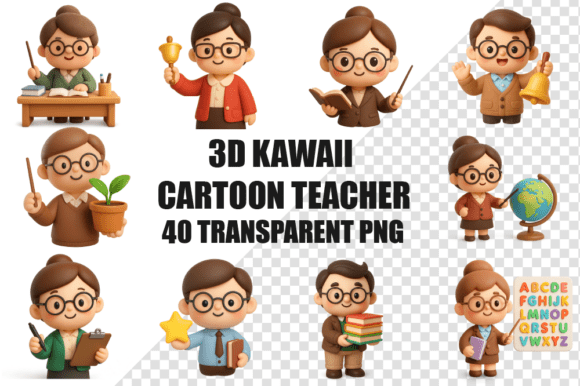
40 3D Kawaii Cartoon Teacher Characters: A Practical Guide for Creators
Visual storytelling in education and branding has evolved significantly. The shift from flat, two-dimensional clipart to expressive, depth-rich illustrations is not just a trend; it is a necessity for capturing attention in a crowded digital landscape. When you explore the 40 3D Kawaii Cartoon Teacher Characters collection, you are looking at more than just a set of images. You are accessing a toolkit designed to humanize educational content, add warmth to classroom materials, and elevate the aesthetic of teaching resources without sacrificing clarity.
However, integrating these assets into your projects requires a strategic approach. Many creators rush to download high-quality graphics only to find that the final result looks disjointed or unprofessional due to overlooked technical details. Understanding how to properly evaluate, apply, and optimize these characters is the difference between a polished project and one that feels generic.
The Value of Unique 3D Kawaii Styles in Education
The appeal of the 40 Unique 3D Kawaii Teacher Characters lies in their ability to bridge the gap between professional authority and approachable friendliness. In the world of children's learning materials, a stern or overly realistic illustration can sometimes create distance. Conversely, the "kawaii" style—known for its cuteness and charm—invites engagement. When combined with 3D rendering, these characters gain volume and presence, making them ideal for modern digital interfaces, interactive worksheets, and vibrant social media graphics.
These characters are not limited to a single demographic. They feature male and female teachers engaged in diverse activities: writing on chalkboards, holding apples, pointing to globes, grading report cards, and demonstrating math concepts. This variety ensures that educators and content creators can find specific scenarios that match their narrative needs. Whether you are designing a teacher planner, creating flashcards for language arts, or building a school branding package, having a cohesive set of characters allows for visual consistency across all your materials.
Common Pitfalls When Selecting Digital Illustrations
Despite the obvious benefits, there are several common mistakes creators make when sourcing and using digital character packs like this one. Recognizing these errors early can save you time, money, and frustration during the design process.
Ignoring Resolution and File Format Nuances
A frequent oversight is assuming that "high-resolution" means the image will look perfect in any context. While the 40 3D Kawaii Cartoon Teacher Characters are delivered as high-resolution PNGs with transparent backgrounds, the source file size matters. If you plan to use these images for large-scale printables, such as classroom posters or banners, you must verify the pixel dimensions before purchasing. Downloading a pack intended for web use and scaling it up for a 24x36 inch poster will result in pixelation and blurriness, ruining the professional quality of your work.
Additionally, some users forget to check the transparency settings. A transparent background is essential for layering these characters over colorful designs, but if the file is saved incorrectly or converted through a lossy compressor, you may end up with jagged edges or unwanted white halos around the characters. Always preview the files in your design software immediately after downloading to ensure the alpha channel is clean.
Mismatching Style and Tone
Another subtle error is forcing a kawaii aesthetic into contexts where it clashes with the overall brand identity. While these characters are charming, they have a distinct personality. Placing a whimsical, soft-edged 3D teacher next to rigid, corporate-style typography or dark, serious color palettes can create visual dissonance. This inconsistency confuses the audience and weakens the message.
For example, if you are creating a formal academic report or a serious administrative document, these playful characters might undermine the gravity of the content. They shine best in environments focused on engagement, learning, and fun—such as children's books, lesson plans, tutoring blogs, or motivational stickers. Before committing to a design, ask yourself if the tone of the illustration supports the intent of the communication.
Overlooking Licensing and Commercial Use
Perhaps the most critical mistake involves misunderstanding licensing terms. Many creators assume that because they bought a digital asset, they can do anything with it. However, licenses vary widely. Some allow personal use only, while others grant full commercial rights. With the 40 3D Kawaii Cartoon Teacher Characters, it is crucial to confirm that the license explicitly permits commercial use if you intend to sell products featuring these images, such as printable planners, merchandise, or paid courses.
Failing to secure the correct rights can lead to legal complications, forced removal of your products, or even financial penalties. Always read the terms of service associated with the download. Ensure you understand whether you need to attribute the artist, if you can modify the images, and if you are allowed to resell them as part of a larger bundle.
Strategies for Effective Implementation
To maximize the value of these assets, adopt a methodical approach to selection and application. Here are practical steps to ensure your projects stand out.
- Test Color Harmony: Before finalizing a layout, place the character against your intended background colors. Since these are 3D renders, lighting effects can interact with your background hues. Adjust your color palette to complement the shading on the characters rather than competing with it.
- Maintain Consistency: If you are creating a series of worksheets or a multi-page ebook, try to use the same character or a consistent subset of the 40 options throughout. This builds recognition and helps students or readers connect with the "teacher" figure as a recurring guide.
- Leverage Pose Diversity: Take advantage of the unique poses included in the bundle. Instead of always showing a teacher standing, mix in scenes where they are sitting, pointing, or holding props like globes and books. This dynamic range keeps the visual experience fresh and engaging.
- Optimize for Platform: If you are using these for social media graphics, crop and resize them specifically for each platform's aspect ratio. Do not simply stretch the image to fit. Use the transparent background to your advantage by placing the character centrally with ample space for text overlays.
Evaluating Quality Before You Commit
Before making a decision to purchase or download the 40 3D Kawaii Cartoon Teacher Characters, conduct a thorough evaluation. Look for sample previews that show the characters at 100% zoom. Check the edges of the hair, clothing, and props for smoothness. High-quality 3D renders should have clean lines and no visible artifacts.
Also, consider the versatility of the themes. Does the pack include enough variety for your specific niche? If you focus heavily on science education, ensure there are characters holding beakers or microscopes. If your work is centered on literacy, look for figures with books and alphabet blocks. The breadth of the 40-character set should cover the majority of your needs, reducing the likelihood of needing to buy additional assets later.
Finally, think about the long-term usability of the files. Are they organized in a logical folder structure? Is there a clear documentation file explaining the usage rights? A well-packaged product reflects the professionalism of the creator and makes your workflow smoother. By paying attention to these details, you ensure that your investment in these digital assets translates into high-quality, effective, and visually appealing educational resources.