ABC Letter H Mini Book- 7 Activities: A Strategic Tool for Early Literacy
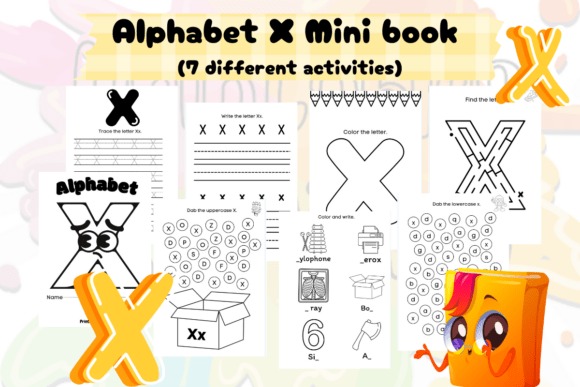
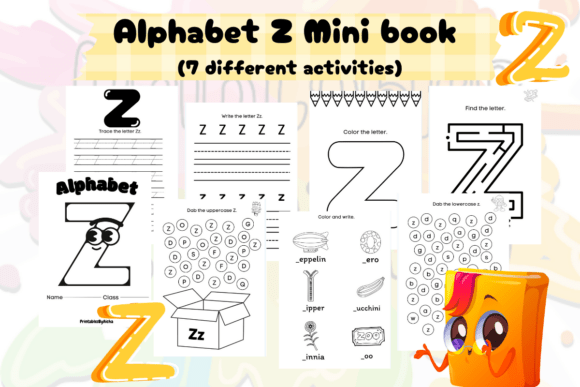
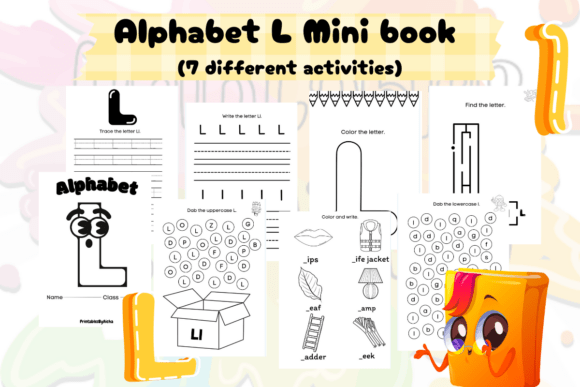
For educators, homeschooling parents, and curriculum developers, the challenge often lies not in finding content, but in integrating high-quality resources into a cohesive learning workflow. The ABC Letter H Mini Book- 7 Activities serves as a targeted intervention tool designed to streamline the process of teaching early literacy. Rather than acting as a standalone novelty, this printable resource functions as a modular component within a broader educational strategy. It addresses specific developmental milestones related to the letter H, offering a structured approach to phonics, fine motor skills, and visual discrimination.
When planning a weekly lesson schedule or organizing a literacy center, efficiency is paramount. This mini-book reduces preparation time by bundling seven distinct activities into a single, coherent packet. By consolidating tasks such as tracing, dabbing, mazes, and cut-and-paste exercises, it allows instructors to focus on delivery and observation rather than material creation. This shift from content generation to content facilitation is critical for maintaining consistency in instruction across preschool, pre-K, and kindergarten settings.
Integrating the Resource into Daily Learning Workflows
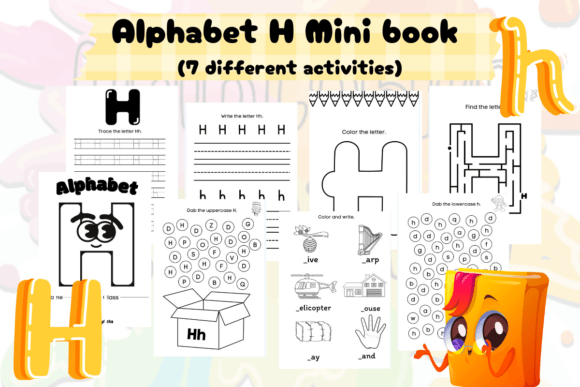
The utility of the ABC Letter H Mini Book- 7 Activities extends beyond simple printing; it requires strategic placement within the daily routine to maximize impact. In a classroom setting, this resource fits seamlessly into morning tubs or independent work stations. Before the main instructional block, students can engage with the "Trace the letter H" pages to warm up their fine motor muscles. This preparatory phase ensures that when formal handwriting instruction begins, students have already primed their neural pathways for letter formation.
During the core learning segment, the "Dab the uppercase and lowercase H" activity serves as an active assessment tool. Educators can use this moment to observe letter recognition skills in real-time. If a student struggles to differentiate between 'H' and 'h', the teacher can immediately pivot to a more focused intervention without derailing the group's progress. This immediate feedback loop is essential for data-driven instruction, allowing for quick adjustments to the learning plan based on observed performance.
Post-instruction, the "Find the letter H maze" and "Color the letter H" pages offer a low-stakes environment for reinforcement. These activities allow learners to apply what they have just practiced in a less pressured context. For remote learning or homework packets, the entire mini-book acts as a self-contained unit that parents can administer with minimal guidance, ensuring continuity of practice outside the primary learning environment.
Operational Mechanics: How the Seven Activities Function
To understand the value of this resource, one must analyze how its specific components interact to build comprehensive literacy skills. The seven activities are not random; they follow a pedagogical progression designed to move from concrete manipulation to abstract understanding.
- Fine Motor Foundation: The initial tracing activities focus on muscle memory. By physically moving a pencil over the strokes of uppercase and lowercase H, students internalize the directionality and shape of the letter. This is a prerequisite for legible handwriting.
- Visual Discrimination: The "Dab" and "Find" activities require students to scan a field of information and isolate the target letter. This sharpens the eye-hand coordination necessary for reading fluency later on.
- Phonemic Awareness: The section dedicated to "Letter H beginning sounds" bridges the gap between visual recognition and auditory processing. Students must connect the symbol 'H' with the /h/ sound found in words like "hat," "house," and "horse."
- Vocabulary Expansion: The cut-and-paste exercises introduce new vocabulary words that start with H. This component integrates language arts with cognitive sorting skills, reinforcing the concept that letters represent sounds which form words.
This multi-sensory approach ensures that different learning styles are accommodated within a single worksheet set. Kinesthetic learners benefit from the cutting and pasting, while visual learners thrive on the coloring and maze elements. By addressing these varied modalities, the ABC Letter H Mini Book- 7 Activities increases the likelihood of retention and mastery.
Compatibility with Broader Educational Systems
Successful implementation relies on how well a resource aligns with existing standards and organizational structures. This mini-book is explicitly designed to support Common Core ELA standards regarding print concepts and phonological awareness. When selecting materials for a school district or a homeschool curriculum, alignment with these benchmarks is non-negotiable. Using this resource ensures that the time spent on the letter H contributes directly to measurable academic goals.
Furthermore, the format of the mini-book is highly compatible with various physical storage systems. Whether utilizing alphabet practice folders, binders, or digital tablets with stylus capabilities, the layout is adaptable. For schools transitioning to paperless initiatives, the PDF nature of the worksheets allows for easy distribution via learning management systems (LMS) or email. Parents can print them at home, or students can complete them digitally if the file format supports annotation.
In terms of scalability, this resource works equally well for individualized instruction and large-group management. A special education teacher might use the "Cut and paste" page to work one-on-one with a student struggling with scissor skills, while a general education teacher might distribute the "Maze" page to twenty students simultaneously as a quiet transition activity. This versatility makes it a cost-effective asset for any educational budget.
Quality Control and Long-Term Implementation
When incorporating third-party resources into a curriculum, quality control is essential. The ABC Letter H Mini Book- 7 Activities undergoes a design process that prioritizes clarity and age-appropriateness. The fonts used for tracing should be clear and unambiguous, avoiding decorative scripts that could confuse young learners. The instructions must be concise, relying on visual cues where possible to support emerging readers who cannot yet decode complex text.
Long-term use depends on the resource's ability to remain relevant and engaging. While the letter H is a static concept, the application of these activities can evolve. Teachers can laminate the pages for reuse with dry-erase markers, extending the lifespan of the material significantly. Alternatively, the cut-and-paste sections can be repurposed into word walls or bulletin board displays, turning a consumable worksheet into a permanent classroom decoration that reinforces learning throughout the year.
Consistency is another key factor. Using a standardized format for each letter of the alphabet helps students develop a predictable routine. When a child sees the familiar layout of the mini-book, they know exactly what is expected of them. This predictability reduces anxiety and increases engagement, allowing more cognitive energy to be directed toward the actual learning task.
Strategic Decision Making for Purchasers
For administrators and parents deciding whether to invest in this resource, the decision should be based on workflow efficiency and educational outcomes. Does this tool save time? Yes, by eliminating the need to create custom worksheets for every letter. Does it improve results? Yes, by providing a structured, multi-sensory approach to mastering the letter H.
Consider the opportunity cost of not using such a resource. Creating similar activities from scratch requires significant research, design time, and testing. By leveraging a pre-made, professionally designed packet like the ABC Letter H Mini Book- 7 Activities, educators reclaim hours of planning time. This time can then be redirected toward differentiation, parent communication, or professional development.
Ultimately, the integration of this mini-book represents a commitment to intentional teaching. It moves beyond rote memorization to a deeper understanding of how letters function within the English language. By embedding these seven activities into the daily rhythm of the classroom or home, adults provide young learners with the foundational tools they need to become confident readers and writers. The result is a smoother, more effective learning process that benefits both the instructor and the student.