Sight Word 1: A Practical Guide to Early Literacy Coloring Workbooks
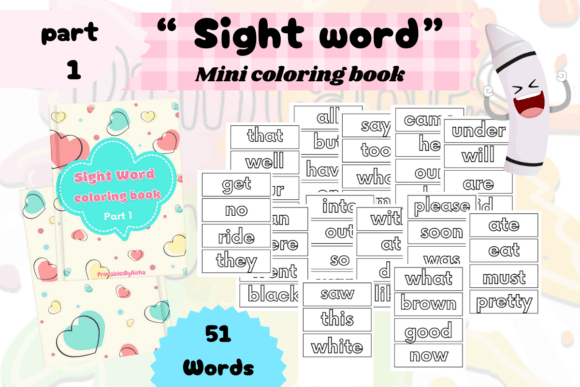
Building a strong foundation in reading begins with recognizing high-frequency words instantly. For parents, educators, and tutors working with children aged 4 to 6, the Sight Word 1 coloring book represents a specific approach to this challenge. Unlike traditional worksheets that focus solely on repetition or flashcards that rely on rote memorization, this resource combines literacy instruction with creative expression. It is designed to introduce 51 essential Dolch Pre-Primer and Primer sight words through a dual-purpose format where learning and play intersect.
When evaluating educational tools for early readers, it is crucial to understand not just what a product contains, but how its design influences engagement and retention. The Sight Word 1 workbook positions itself as a bridge between structured academic work and free-form artistic activity. This guide explores the distinct features of this resource, compares it to alternative methods, and helps you determine if it aligns with your child's learning style and your educational goals.
Understanding the Core Concept of Sight Word 1
The primary function of the Sight Word 1 activity book is to facilitate word recognition through multi-sensory engagement. It targets the "Dolch" list, a collection of high-frequency words that appear most often in children's literature. These words often do not follow standard phonetic rules, making them difficult for young learners to decode using phonics alone. Consequently, they must be recognized by sight.
What makes this specific workbook distinct is its integration of coloring activities with traceable text. Each page typically presents a bold, large-print sight word that the child can trace, followed by an illustration related to the concept or simply a decorative element to color. This structure serves two cognitive purposes simultaneously:
- Motor Skill Development: Tracing the letters reinforces muscle memory, aiding in handwriting fluency.
- Visual Association: Coloring the surrounding imagery creates a positive emotional association with the word, potentially improving recall.
For adults managing a homeschool curriculum or supporting kindergarten readiness, the Sight Word 1 format offers a low-pressure environment. It removes the anxiety often associated with "tests" or strict drills, replacing them with an activity that feels like leisure time while still delivering educational value.
Comparing Formats: Coloring Books vs. Traditional Worksheets
When selecting resources for early literacy, the choice often comes down to the format. Traditional printable worksheets are ubiquitous; they are often black-and-white grids filled with repetitive writing lines. While effective for drilling, they can quickly become tedious for a preschooler or kindergartener. In contrast, the Sight Word 1 coloring book adopts a more visual and interactive layout.
The tradeoff lies in the depth of practice versus the breadth of engagement. A standard worksheet might offer ten lines of a single word to ensure perfect letter formation. The coloring book approach usually provides fewer lines per page but adds the variable of color and creativity. For a child who struggles with focus, the added element of coloring can extend their attention span significantly longer than a blank sheet of paper would.
However, it is important to note that coloring books may not provide the same volume of handwriting practice as dedicated penmanship workbooks. If your primary goal is strictly refining cursive or print formation mechanics, a specialized handwriting book might be more efficient. But if the goal is broad exposure to vocabulary and maintaining interest in the learning process, the Sight Word 1 hybrid model often yields better results in terms of sustained participation.
Digital Alternatives and Interactive Apps
In today's digital landscape, many parents consider tablet apps as alternatives to physical workbooks. Digital tools offer immediate feedback, sound effects, and animated rewards. While these are engaging, they lack the tactile experience of holding a pencil and feeling the resistance of paper.
The Sight Word 1 physical book supports fine motor skills in a way screens cannot. The act of coloring within lines and tracing letters requires hand-eye coordination and grip strength that are foundational for future writing tasks. Furthermore, physical books reduce screen time, a concern for many families aiming to balance technology use. For ESL learners specifically, the physical connection to the word—seeing it, writing it, and coloring around it—can create stronger neural pathways than tapping a screen.
Evaluating Suitability for Different Learning Environments
The versatility of the Sight Word 1 resource allows it to fit into various educational settings, though its effectiveness depends on how it is utilized.
Homeschool and Independent Study
For homeschooling parents, this type of workbook is a staple for independent work periods. Because the instructions are intuitive—trace and color—it allows children to work autonomously. This gives parents the opportunity to observe progress without needing to sit directly beside the child for every task. The inclusion of 51 words provides a substantial curriculum block that can last several weeks, depending on the pace of the learner.
Classroom Literacy Centers
In a classroom setting, teachers often need materials that can rotate among small groups. The Sight Word 1 book is well-suited for literacy centers where students work quietly. Its self-contained nature means less teacher intervention is required compared to complex group games. However, teachers should consider the durability of the book if multiple children will use it; laminating pages or using protective covers might be necessary for long-term classroom use.
ESL and Special Needs Support
For English Language Learners (ELL) or children with learning differences, the visual cues provided by the illustrations are particularly beneficial. The context clues from the drawings help anchor the meaning of abstract words. Additionally, the reduced pressure of a "test-like" environment can lower anxiety, allowing these learners to engage with the material more freely.
Strengths and Limitations of the Approach
To make an informed decision, one must weigh the benefits against potential limitations. The strengths of the Sight Word 1 coloring book are clear: it boosts engagement, supports fine motor development, and covers a critical set of vocabulary words essential for early reading fluency. The combination of the Dolch Pre-Primer and Primer lists ensures that the content is age-appropriate for the 4–6 demographic.
However, there are limitations. First, the reliance on coloring means that the pacing of learning is tied to the child's artistic speed rather than their reading speed. A child who colors slowly may take longer to complete the set of words. Second, while the book introduces the words, it does not replace the need for reading aloud. Parents and teachers must supplement this workbook with actual reading sessions where the child encounters these words in sentences and stories.
Furthermore, once the 51 words are mastered, the book is exhausted. Unlike subscription-based digital platforms that offer endless content, a physical workbook has a finite lifespan. This is not necessarily a negative, as it provides a clear sense of completion, but it does mean you will need to plan for subsequent resources as the child advances to Grade 1 and beyond.
Decision Factors: Is This the Right Tool for You?
Deciding whether to invest in the Sight Word 1 coloring book depends on your specific educational priorities. It is likely the right choice if:
- Your child resists traditional worksheets and needs a more playful entry point into learning.
- You are looking for a resource that combines literacy with art therapy or creative time.
- You need a portable, screen-free activity for travel or quiet time at home.
- You are focusing on the initial stage of sight word acquisition (Pre-Primer and Primer levels).
Conversely, you might look for alternative options if:
- Your child already has excellent fine motor skills and needs intensive handwriting drills.
- You require a curriculum that includes audio components or interactive quizzes.
- You are teaching older children who have already mastered the basic Dolch lists and need more advanced vocabulary.
Ultimately, the Sight Word 1 coloring book is a valuable component of a broader literacy strategy. It excels at introducing concepts and maintaining interest but works best when paired with active reading and conversation. By understanding its role as a supportive tool rather than a standalone solution, parents and educators can maximize its impact on a child's journey toward becoming a fluent reader.